Neurology is the branch of medicine that deals with the anatomy, functions, and organic disorders of nerves and the nervous system.
Common Neurologists Diagnoses & Treated Conditions
infections of the nervous system, including encephalitis, meningitis, or brain abscesses
neurodegenerative disorders, such as Lou Gehrig’s disease and Alzheimer’s disease
spinal cord disorders, including inflammatory and autoimmune disorders
seizure disorders, such as epilepsy
stroke
multiple sclerosis
neuromuscular disorders, such as myasthenia gravis
headaches, such as cluster headaches and migraines
"Lawrence in the EEG department was phenomenal. Such a kind young man, he was able to answer all my questions and put me at ease before doing the test. He is very knowledgeable and enthusiastic about what he does."
- Anonymous Patient
How a Diagnosis is Made
To make a diagnosis, a neurologist may use imaging tests such as:
computed tomography, or CT scan
magnetic resonance imaging, or MRI scan
positron emission tomography, or PET scan
A neurologist may also require psychical tests in order to make a formal diagnosis, such as:
Neurological Exam
Typically, the exam tests vision, strength, coordination, reflexes, and sensation.
Lumbar puncture
Your neurologist may use a lumbar puncture to test your spinal fluid. They may recommend the procedure if they believe your symptoms are caused by a problem in your nervous system that can be detected in your spinal fluid.
The procedure involves inserting a needle into the spine after numbing it and taking a sample of spinal fluid.
Electroencephalogram (EEG)
This test measures electrical activity in the brain, by applying small electrodes to your head.
Other diagnostic procedures include sleep studies and angiography. Angiography determines blockages in the blood vessels going to the brain.
Your neurologist may help you manage your symptoms and neurological disorder alone, or work with your primary care physician and other specialists.
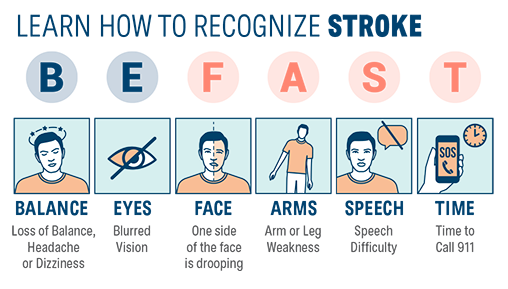
Use the B.E. F.A.S.T. Test
Learn how to recognize a Stroke
Balance: Loss of balance, headache, dizziness
Eyes: The person may be experiencing blurred vision.
Face: Ask the person to smile. Is the face lopsided?
Arm: Ask the person to raise their arms. Does one arm drift down?
Speech: Ask the person to repeat a phrase. Does their speech sound strange? Can they do it without slurring words?
Rhode Island's First Member of the Mayo Clinic Care Network
South County Health is the first health system in Rhode Island to join the Mayo Clinic Care Network. Now patients can access global expertise through their South County Health provider, at no additional costs.
Tune in Thursday, October 8 to learn more and hear from South County Health and Mayo Clinic leaders.




 Meet The Team
 Patient Portals
 Expressions of Gratitude
 Patient Stories